Apa Kabar Dunia

Perkaya Wawasan, Imajinasi dan Kreatifitasmu

English French German Spain Italian Dutch Japanese Chinese Simplified Arabic

video

-
Showing posts with label feature. Show all posts

Rainbow Tower looms large in Waikiki vision

The city within a city, or resort within a resort, as it might prefer to be known, that is Hilton Hawaiian Village in Waikiki turns 50 next year, but its most iconic feature is a bit younger than that. The 31-story Rainbow Tower, named for its colorful, multistory mosaics, opened in 1968.

Dan Steigelman of Vacaville and Geraldine Picazo of Antioch, who says she has a timeshare next door at the 'Ilikai, quickly identified the tower and its construction date, the subject of last Sunday's Photo Quiz. "We try to visit O'ahu every year. We love it there," Geraldine added.

Of course, those who remember the days of low-rise hotels -- or none at all -- may not have fond feelings about the tower, which wasn't the first in Waikiki but was far from the last. Michael Cordova of San Francisco had this charitable perspective: "Nothing better then floating on a $1.98 floaty bed from ABC in the lagoon and looking up at the tower. Even better when you have had a few lava flows by 11 a.m. and looking up, yeah? Love it or hate it, it always says ALOHA!"

Beverly Russell of San Ramon stayed there in 1989 "when we took our girls to Hawaii their first time." Her own first trip to Hawai'i in 1957 was pretty special: "My parents cruised there on one of the Matson Line ships. Jerry Lewis was also on board. We stayed at the original Hawaiian Village where there were actual 'huts' that were rooms."

The timeline is a little complicated because Hilton Hawaiian Village is celebrating its 50th anniversary as a Hilton property in 2011; the thatched-roof cottages that Russell remembers were built in 1955, a year after Henry Kaiser and Fritz Burns had purchased the original Niumalu Hotel (opened in 1928) on eight oceanfront acres. The first tower, now called the Ali'i Tower opened in 1957, followed by two more before Conrad Hilton gained a majority stake.
In 1968, the Rainbow Tower opened with what is called "the world's largest ceramic tile mosaic"; more than 16,000 tiles form rainbows 286 feet tall by 26 feet wide, on either end of the tower. If you haven't seen it in person, then you might have spotted it on the new "Hawaii Five-O." It's definitely hard to miss.

For 42 years the Rainbow Tower of Hilton Hawaiian Village has been a beacon for flights in and out of Honolulu.


Source :  
The city within a city, or resort within a resort, as it might prefer to be known, that is Hilton Hawaiian Village in Waikiki turns 50 next year, but its most iconic feature is a bit younger than that. The 31-story Rainbow Tower, named for its colorful, multistory mosaics, opened in 1968.

Dan Steigelman of Vacaville and Geraldine Picazo of Antioch, who says she has a timeshare next door at the 'Ilikai, quickly identified the tower and its construction date, the subject of last Sunday's Photo Quiz. "We try to visit O'ahu every year. We love it there," Geraldine added.

Of course, those who remember the days of low-rise hotels -- or none at all -- may not have fond feelings about the tower, which wasn't the first in Waikiki but was far from the last. Michael Cordova of San Francisco had this charitable perspective: "Nothing better then floating on a $1.98 floaty bed from ABC in the lagoon and looking up at the tower. Even better when you have had a few lava flows by 11 a.m. and looking up, yeah? Love it or hate it, it always says ALOHA!"

Beverly Russell of San Ramon stayed there in 1989 "when we took our girls to Hawaii their first time." Her own first trip to Hawai'i in 1957 was pretty special: "My parents cruised there on one of the Matson Line ships. Jerry Lewis was also on board. We stayed at the original Hawaiian Village where there were actual 'huts' that were rooms."

The timeline is a little complicated because Hilton Hawaiian Village is celebrating its 50th anniversary as a Hilton property in 2011; the thatched-roof cottages that Russell remembers were built in 1955, a year after Henry Kaiser and Fritz Burns had purchased the original Niumalu Hotel (opened in 1928) on eight oceanfront acres. The first tower, now called the Ali'i Tower opened in 1957, followed by two more before Conrad Hilton gained a majority stake.
In 1968, the Rainbow Tower opened with what is called "the world's largest ceramic tile mosaic"; more than 16,000 tiles form rainbows 286 feet tall by 26 feet wide, on either end of the tower. If you haven't seen it in person, then you might have spotted it on the new "Hawaii Five-O." It's definitely hard to miss.

For 42 years the Rainbow Tower of Hilton Hawaiian Village has been a beacon for flights in and out of Honolulu.


Source :  

100 whales die in New Zealand mass stranding

More than 100 pilot whales died in a mass stranding at a remote New Zealand beach, conservation officials said Monday.


Hikers on Sunday reported finding 107 whales beached on Stewart Island, off the South Island's southwest coast, a Department of Conservation (DoC) spokesman said.
He said some of the whales were already dead and DOC rangers had to euthanise the 48 remaining survivors as there was no prospect of refloating them.

"We were quickly aware that it would be at least 10 to 12 hours before we could attempt to refloat them and that given the hot, dry conditions many more would soon perish," he said.
The spokesman said a storm was also bearing down on the beach near Mason Bay where the whales were stranded, making it too dangerous to try to get them back into the sea.

"We were worried we would be endangering the lives of staff and volunteers," he said.
Pilot whales up to six metres (20 feet) long are the most common species of whale seen in New Zealand waters.

Mass strandings are common on the country's rugged coast. Earlier this month, 14 died after beaching near the South Island tourist city of Nelson and 24 perished last month near Cape Reinga in the country's far north.

Scientists are unsure why pilot whales beach themselves, although they speculate it may occur when their sonar becomes scrambled in shallow water or when a sick member of the pod heads for shore and others follow.

Source :
http://news.yahoo.com/
More than 100 pilot whales died in a mass stranding at a remote New Zealand beach, conservation officials said Monday.


Hikers on Sunday reported finding 107 whales beached on Stewart Island, off the South Island's southwest coast, a Department of Conservation (DoC) spokesman said.
He said some of the whales were already dead and DOC rangers had to euthanise the 48 remaining survivors as there was no prospect of refloating them.

"We were quickly aware that it would be at least 10 to 12 hours before we could attempt to refloat them and that given the hot, dry conditions many more would soon perish," he said.
The spokesman said a storm was also bearing down on the beach near Mason Bay where the whales were stranded, making it too dangerous to try to get them back into the sea.

"We were worried we would be endangering the lives of staff and volunteers," he said.
Pilot whales up to six metres (20 feet) long are the most common species of whale seen in New Zealand waters.

Mass strandings are common on the country's rugged coast. Earlier this month, 14 died after beaching near the South Island tourist city of Nelson and 24 perished last month near Cape Reinga in the country's far north.

Scientists are unsure why pilot whales beach themselves, although they speculate it may occur when their sonar becomes scrambled in shallow water or when a sick member of the pod heads for shore and others follow.

Source :
http://news.yahoo.com/

FACT CHECK: Mass bird, fish deaths occur regularly

First, the blackbirds fell out of the sky on New Year's Eve in Arkansas. In recent days, wildlife have mysteriously died in big numbers: 2 million fish in the Chesapeake Bay, 150 tons of red tilapia in Vietnam, 40,000 crabs in Britain and other places across the world.
Blogs connected the deadly dots, joking about the "aflockalypse" while others saw real signs of something sinister, either biblical or environmental.

The reality, say biologists, is that these mass die-offs happen all the time and usually are unrelated.

Federal records show they happen on average every other day somewhere in North America. Usually, we don't notice them and don't try to link them to each other.

"They generally fly under the radar," said ornithologist John Wiens, chief scientist at the California research institution PRBO Conservation Science.

Since the 1970s, the U.S. Geological Survey's National Wildlife Health Center in Wisconsin has tracked mass deaths among birds, fish and other critters, said wildlife disease specialist LeAnn White. At times the sky and the streams just turn deadly. Sometimes it's disease, sometimes pollution. Other times it's just a mystery.

In the past eight months, the USGS has logged 95 mass wildlife die-offs in North America and that's probably a dramatic undercount, White said. The list includes 900 some turkey vultures that seemed to drown and starve in the Florida Keys, 4,300 ducks killed by parasites in Minnesota, 1,500 salamanders done in by a virus in Idaho, 2,000 bats that died of rabies in Texas, and the still mysterious death of 2,750 sea birds in California.

On average, 163 such events are reported to the federal government each year, according to USGS records. And there have been much larger die-offs than the 3,000 blackbirds in Arkansas. Twice in the summer of 1996, more than 100,000 ducks died of botulism in Canada.

"Depending on the species, these things don't even get reported," White said.

Weather — cold and wet weather like in Arkansas New Year's Eve when the birds fell out of the sky — is often associated with mass bird deaths, ornithologists say. Pollution, parasites and disease also cause mass deaths. Some are even blaming fireworks for the blackbird deaths.

So what's happening this time?

Blame technology, says famed Harvard biologist E.O. Wilson. With the Internet, cell phones and worldwide communications, people are noticing events, connecting the dots more.

"This instant and global communication, it's just a human instinct to read mystery and portents of dangers and wondrous things in events that are unusual," Wilson told The Associated Press on Thursday. "Not to worry, these are not portents that the world is about to come to an end."

Wilson and the others say instant communications — especially when people can whip out smart phones to take pictures of critter carcasses and then post them on the Internet — is giving a skewed view of what is happening in the environment.

The irony is that mass die-offs — usually of animals with large populations — are getting the attention while a larger but slower mass extinction of thousands of species because of human activity is ignored, Wilson said.

___

AP Researcher Julie Reed Bell contributed to this report.

Source: http://news.yahoo.com
First, the blackbirds fell out of the sky on New Year's Eve in Arkansas. In recent days, wildlife have mysteriously died in big numbers: 2 million fish in the Chesapeake Bay, 150 tons of red tilapia in Vietnam, 40,000 crabs in Britain and other places across the world.
Blogs connected the deadly dots, joking about the "aflockalypse" while others saw real signs of something sinister, either biblical or environmental.

The reality, say biologists, is that these mass die-offs happen all the time and usually are unrelated.

Federal records show they happen on average every other day somewhere in North America. Usually, we don't notice them and don't try to link them to each other.

"They generally fly under the radar," said ornithologist John Wiens, chief scientist at the California research institution PRBO Conservation Science.

Since the 1970s, the U.S. Geological Survey's National Wildlife Health Center in Wisconsin has tracked mass deaths among birds, fish and other critters, said wildlife disease specialist LeAnn White. At times the sky and the streams just turn deadly. Sometimes it's disease, sometimes pollution. Other times it's just a mystery.

In the past eight months, the USGS has logged 95 mass wildlife die-offs in North America and that's probably a dramatic undercount, White said. The list includes 900 some turkey vultures that seemed to drown and starve in the Florida Keys, 4,300 ducks killed by parasites in Minnesota, 1,500 salamanders done in by a virus in Idaho, 2,000 bats that died of rabies in Texas, and the still mysterious death of 2,750 sea birds in California.

On average, 163 such events are reported to the federal government each year, according to USGS records. And there have been much larger die-offs than the 3,000 blackbirds in Arkansas. Twice in the summer of 1996, more than 100,000 ducks died of botulism in Canada.

"Depending on the species, these things don't even get reported," White said.

Weather — cold and wet weather like in Arkansas New Year's Eve when the birds fell out of the sky — is often associated with mass bird deaths, ornithologists say. Pollution, parasites and disease also cause mass deaths. Some are even blaming fireworks for the blackbird deaths.

So what's happening this time?

Blame technology, says famed Harvard biologist E.O. Wilson. With the Internet, cell phones and worldwide communications, people are noticing events, connecting the dots more.

"This instant and global communication, it's just a human instinct to read mystery and portents of dangers and wondrous things in events that are unusual," Wilson told The Associated Press on Thursday. "Not to worry, these are not portents that the world is about to come to an end."

Wilson and the others say instant communications — especially when people can whip out smart phones to take pictures of critter carcasses and then post them on the Internet — is giving a skewed view of what is happening in the environment.

The irony is that mass die-offs — usually of animals with large populations — are getting the attention while a larger but slower mass extinction of thousands of species because of human activity is ignored, Wilson said.

___

AP Researcher Julie Reed Bell contributed to this report.

Source: http://news.yahoo.com

New Research: Walking 5 Miles a Week Slows Progression of Alzheimer’s

According to the results of a new study, walking five miles a week may help slow the cognitive decline associated with Alzheimer’s disease in adults. The study also suggests that walking could help those suffering from Mild Cognitive Impairment (MCI), a condition that is similar to Alzheimer’s, yet not as severe.

The Study 
This was a long, ongoing study that lasted twenty years. It consisted of a total of 426 people, including 299 healthy adults with an average age of 78, as well as 127 cognitively impaired adults with an average age of 81. The cognitively impaired group breaks down to 44 adults with Alzheimer’s disease and 83 adults with MCI.

During the 20-year study, Dr. Cyrus Raji from the Department of Radiology at the University of Pittsburgh in Pennsylvania analyzed the relationship between physical activity and brain structure for both groups of adults. Dr. Raji observed how far each of the patients walked every week.

After ten years, all the patients in the study underwent 3D MRI exams to get a better look at their brain volume. Brain volume is a vital sign of how healthy your brain is. When brain volume decreases, it means that brain cells are dying off. When brain volume remains high, it means that brain cells are not dying and optimal brain health is maintained.

In addition to identifying changes in brain volume via 3D MRI scans, researchers also gave patients mini-mental state exams (MMSE) to help track cognitive decline over the course of five years. Researchers then correlated physical activity levels with their MRI & MMSE results.

In every case, researchers found that the more physical activity patients did, the more brain volume they had. They came to the conclusion that cognitively impaired patients need to walk at least 5 miles a week, roughly 58 city blocks, to maintain brain volume and slow down further cognitive decline. Researchers added that healthy adults need to walk at least six miles a week, roughly 72 city blocks, to maintain brain volume and considerably reduce their chances of developing Alzheimer’s.

Dr. Cyrus Raji, Ph.D., from the Department of Radiology at the University of Pittsburgh in Pennsylvania:
“We found that walking five miles per week protects the brain structure over 10 years in people with Alzheimer’s and MCI, especially in areas of the brain’s key memory and learning centers. We also found that these people had a slower decline in memory loss over five years. Alzheimer’s is a devastating illness, and unfortunately, walking is not a cure, but walking can improve your brain’s resistance to the disease and reduce memory loss over time.”

What We Can Learn From This Study
We’ve known for a long time that frequent exercise is important for health. But after reviewing the results of this new study, staying active and getting plenty of cardio exercise is more important than ever, especially for senior citizens. It’s not always easy, but try going for a walk at least once a day. Start off slow and work your way up to walking more and more.

Source: http://nutritionhealthfitness.com/
According to the results of a new study, walking five miles a week may help slow the cognitive decline associated with Alzheimer’s disease in adults. The study also suggests that walking could help those suffering from Mild Cognitive Impairment (MCI), a condition that is similar to Alzheimer’s, yet not as severe.

The Study 
This was a long, ongoing study that lasted twenty years. It consisted of a total of 426 people, including 299 healthy adults with an average age of 78, as well as 127 cognitively impaired adults with an average age of 81. The cognitively impaired group breaks down to 44 adults with Alzheimer’s disease and 83 adults with MCI.

During the 20-year study, Dr. Cyrus Raji from the Department of Radiology at the University of Pittsburgh in Pennsylvania analyzed the relationship between physical activity and brain structure for both groups of adults. Dr. Raji observed how far each of the patients walked every week.

After ten years, all the patients in the study underwent 3D MRI exams to get a better look at their brain volume. Brain volume is a vital sign of how healthy your brain is. When brain volume decreases, it means that brain cells are dying off. When brain volume remains high, it means that brain cells are not dying and optimal brain health is maintained.

In addition to identifying changes in brain volume via 3D MRI scans, researchers also gave patients mini-mental state exams (MMSE) to help track cognitive decline over the course of five years. Researchers then correlated physical activity levels with their MRI & MMSE results.

In every case, researchers found that the more physical activity patients did, the more brain volume they had. They came to the conclusion that cognitively impaired patients need to walk at least 5 miles a week, roughly 58 city blocks, to maintain brain volume and slow down further cognitive decline. Researchers added that healthy adults need to walk at least six miles a week, roughly 72 city blocks, to maintain brain volume and considerably reduce their chances of developing Alzheimer’s.

Dr. Cyrus Raji, Ph.D., from the Department of Radiology at the University of Pittsburgh in Pennsylvania:
“We found that walking five miles per week protects the brain structure over 10 years in people with Alzheimer’s and MCI, especially in areas of the brain’s key memory and learning centers. We also found that these people had a slower decline in memory loss over five years. Alzheimer’s is a devastating illness, and unfortunately, walking is not a cure, but walking can improve your brain’s resistance to the disease and reduce memory loss over time.”

What We Can Learn From This Study
We’ve known for a long time that frequent exercise is important for health. But after reviewing the results of this new study, staying active and getting plenty of cardio exercise is more important than ever, especially for senior citizens. It’s not always easy, but try going for a walk at least once a day. Start off slow and work your way up to walking more and more.

Source: http://nutritionhealthfitness.com/

World's Oldest Human Remains Claimed in Israel

 
A handout photo made available by Tel Aviv University spokesperson office shows the Qesem Cave near Rosh Haayin, in central Israel, where human teeth were found. According to Researchers from Tel Aviv University they have uncovered finds that indicate the existence of modern man (Homo sapiens) in Israel as early as about 400,000 years ago.

Israeli archaeologists have discovered human remains dating from 400,000 years ago, challenging conventional wisdom that Homo sapiens originated in Africa, the leader of excavations in Israel said on Tuesday.

Avi Gopher, of Tel Aviv University's Institute of Archaeology, said testing of stalagmites, stalactites and other material found in a cave east of Tel Aviv indicates that eight teeth uncovered there could be the earliest traces so far of our species.

"Our cave was used for a period of about 250,000 years -- from about 400,000 years ago to about 200,000 years ago," he told AFP.

"The teeth are scattered through the layers of the cave, some in the deeper part, that is to say from 400,000 years and through all kinds of other layers that can be up to 200,000 years. The oldest are 400,000 years old", he added."

A handout photo made available by the Tel Aviv University shows human teeth found in the Qesem Cave near Rosh Haayin, in central Israel. According to researchers from Tel Aviv University they have uncovered finds that indicate the existence of modern man (Homo sapiens) in Israel as early as about 400,000 years ago.That calls into question the widely held view that Africa was the birthplace of modern man, said Gopher, who headed the dig at Qesem Cave.

"It is accepted at the moment that the earliest Homo sapiens that we know is in east Africa and is 200,000 years old, or a little less. We don't know of anywhere else where anyone claims to have an earlier Homo sapiens," he said.

Gopher said the first teeth were discovered in 2006 but he and his team waited until they had several samples, then conducted years of testing, using a variety of dating methods, before publishing their findings. Digging continues at the cave, the university said, with researchers hoping to "uncover additional finds that will enable them to confirm the findings published up to now and to enhance our understanding of the evolution of mankind, and especially the appearance of modern man."

Source: physorg.com
 
A handout photo made available by Tel Aviv University spokesperson office shows the Qesem Cave near Rosh Haayin, in central Israel, where human teeth were found. According to Researchers from Tel Aviv University they have uncovered finds that indicate the existence of modern man (Homo sapiens) in Israel as early as about 400,000 years ago.

Israeli archaeologists have discovered human remains dating from 400,000 years ago, challenging conventional wisdom that Homo sapiens originated in Africa, the leader of excavations in Israel said on Tuesday.

Avi Gopher, of Tel Aviv University's Institute of Archaeology, said testing of stalagmites, stalactites and other material found in a cave east of Tel Aviv indicates that eight teeth uncovered there could be the earliest traces so far of our species.

"Our cave was used for a period of about 250,000 years -- from about 400,000 years ago to about 200,000 years ago," he told AFP.

"The teeth are scattered through the layers of the cave, some in the deeper part, that is to say from 400,000 years and through all kinds of other layers that can be up to 200,000 years. The oldest are 400,000 years old", he added."

A handout photo made available by the Tel Aviv University shows human teeth found in the Qesem Cave near Rosh Haayin, in central Israel. According to researchers from Tel Aviv University they have uncovered finds that indicate the existence of modern man (Homo sapiens) in Israel as early as about 400,000 years ago.That calls into question the widely held view that Africa was the birthplace of modern man, said Gopher, who headed the dig at Qesem Cave.

"It is accepted at the moment that the earliest Homo sapiens that we know is in east Africa and is 200,000 years old, or a little less. We don't know of anywhere else where anyone claims to have an earlier Homo sapiens," he said.

Gopher said the first teeth were discovered in 2006 but he and his team waited until they had several samples, then conducted years of testing, using a variety of dating methods, before publishing their findings. Digging continues at the cave, the university said, with researchers hoping to "uncover additional finds that will enable them to confirm the findings published up to now and to enhance our understanding of the evolution of mankind, and especially the appearance of modern man."

Source: physorg.com

Fossil Hunters Uncover Complete 252m Year-Old Underwater World

 
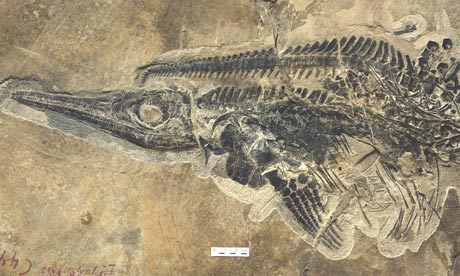
This Ichthyosaur fossil was one of more than 20,000 that were recently uncovered in Luoping, China.

A spectacular haul of 20,000 fossils including plants, carnivorous fish and large reptiles, has been found in a hillside in Luoping, southwestern China

Fossil hunters have uncovered the remains of an ancient marine ecosystem that arose in the aftermath of the most devastating mass extinction in Earth's history.

The spectacular haul of 20,000 fossils from a hillside in southwestern China represents the first discovery of a complete ecosystem which bounced back after life was nearly wiped off the face of the planet 252m years ago.

The beautifully preserved remains include molluscs, sea urchins and arthropods, alongside much larger animals that occupied the top of the food chain, such as carnivorous fish and the first icthyosaurs, predatory marine reptiles that grew to four metres long.

Among the remnants are rare fragments of land life that survived the same period, including part of a conifer plant and the tooth of an archosaur reptile.

The fossils were excavated from rocks that formed when ocean sediments settled out and solidified many millions of years ago in what is now Luoping county in the Yunnan Province of China.

The Earth has witnessed several mass extinctions in its 4.5bn year history, but the event that struck at the end of the Permian was unequaled in scale. Some 96% of marine species and 70% of land vertebrates were lost in what has been called "the great dying".

What caused such global havoc is still open to debate, but Michael Benton, a paleontologist at Bristol University who led the latest research, said evidence points to prolonged and violent eruptions from the Siberian traps, a huge region of volcanic rock. In this scenario, mass eruptions triggered environmental catastrophe by belching an overwhelming quantity of gas into the atmosphere for half a million years.

"The main follow on was a flash warming of the Earth. That caused stagnation in the oceans, as normal circulation shut down. On land, the consequence of all the carbon dioxide and other gases appears to have been massive acid rain that killed the forests and stripped the landscape bare," Benton said. "This was the greatest of all mass extinctions, the time when life was most nearly completely wiped out."

What life survived became the starting point for a recovery that played out over the next ten million years. Some of these organisms, known as "disaster species" clung on through sheer hardiness, somehow coping with the harsh conditions of scarce food, wild variations in temperature and little oxygen in the oceans.

By studying the fossils, Benton and his colleagues at the Chengdu Institute of Geology and Mineral Resources and the University of Western Australia, hope to piece together how life can come back from the brink. "The recovery from mass extinction touches on current concerns about biodiversity and conservation. Why do certain species go extinct? Which species come back? How do you rebuild an ecosystem and how long does it take?" said Benton. The study appears in the Proceedings of the Royal Society B.

The Luoping fossils show that many small organisms at the bottom of the food chain came back within two to three million years. Once their populations stabilised, other creatures that could feed on them recovered, including molluscs and shellfish. The familiar spiralled ammonites bounced back surprisingly fast. Only later did the larger predators reappear in the oceans.

The loss of so many species at the end of the Permian gave new creatures the chance to take their place. Before the mass extinction, the top ocean predators were primitive sharks. Some survived and recovered, but they were joined by the first predatory icthyosaurs. "Part of it is a rebuilding of the ecosystem from the grim survivors, but there are also opportunities for new groups. There were essentially no marine reptiles before the extinction, but this gave them a way in," said Benton.

Paleontologists have unearthed other fossils that give a glimpse of life coming back from the Permian extinction, but the extensive remains at Luoping are unique in having the rich biodiversity of a fully functioning ecosystem, from the lowliest plankton to carnivorous apex predators.

Source : http://www.guardian.co.uk/
 
This Ichthyosaur fossil was one of more than 20,000 that were recently uncovered in Luoping, China.

A spectacular haul of 20,000 fossils including plants, carnivorous fish and large reptiles, has been found in a hillside in Luoping, southwestern China

Fossil hunters have uncovered the remains of an ancient marine ecosystem that arose in the aftermath of the most devastating mass extinction in Earth's history.

The spectacular haul of 20,000 fossils from a hillside in southwestern China represents the first discovery of a complete ecosystem which bounced back after life was nearly wiped off the face of the planet 252m years ago.

The beautifully preserved remains include molluscs, sea urchins and arthropods, alongside much larger animals that occupied the top of the food chain, such as carnivorous fish and the first icthyosaurs, predatory marine reptiles that grew to four metres long.

Among the remnants are rare fragments of land life that survived the same period, including part of a conifer plant and the tooth of an archosaur reptile.

The fossils were excavated from rocks that formed when ocean sediments settled out and solidified many millions of years ago in what is now Luoping county in the Yunnan Province of China.

The Earth has witnessed several mass extinctions in its 4.5bn year history, but the event that struck at the end of the Permian was unequaled in scale. Some 96% of marine species and 70% of land vertebrates were lost in what has been called "the great dying".

What caused such global havoc is still open to debate, but Michael Benton, a paleontologist at Bristol University who led the latest research, said evidence points to prolonged and violent eruptions from the Siberian traps, a huge region of volcanic rock. In this scenario, mass eruptions triggered environmental catastrophe by belching an overwhelming quantity of gas into the atmosphere for half a million years.

"The main follow on was a flash warming of the Earth. That caused stagnation in the oceans, as normal circulation shut down. On land, the consequence of all the carbon dioxide and other gases appears to have been massive acid rain that killed the forests and stripped the landscape bare," Benton said. "This was the greatest of all mass extinctions, the time when life was most nearly completely wiped out."

What life survived became the starting point for a recovery that played out over the next ten million years. Some of these organisms, known as "disaster species" clung on through sheer hardiness, somehow coping with the harsh conditions of scarce food, wild variations in temperature and little oxygen in the oceans.

By studying the fossils, Benton and his colleagues at the Chengdu Institute of Geology and Mineral Resources and the University of Western Australia, hope to piece together how life can come back from the brink. "The recovery from mass extinction touches on current concerns about biodiversity and conservation. Why do certain species go extinct? Which species come back? How do you rebuild an ecosystem and how long does it take?" said Benton. The study appears in the Proceedings of the Royal Society B.

The Luoping fossils show that many small organisms at the bottom of the food chain came back within two to three million years. Once their populations stabilised, other creatures that could feed on them recovered, including molluscs and shellfish. The familiar spiralled ammonites bounced back surprisingly fast. Only later did the larger predators reappear in the oceans.

The loss of so many species at the end of the Permian gave new creatures the chance to take their place. Before the mass extinction, the top ocean predators were primitive sharks. Some survived and recovered, but they were joined by the first predatory icthyosaurs. "Part of it is a rebuilding of the ecosystem from the grim survivors, but there are also opportunities for new groups. There were essentially no marine reptiles before the extinction, but this gave them a way in," said Benton.

Paleontologists have unearthed other fossils that give a glimpse of life coming back from the Permian extinction, but the extensive remains at Luoping are unique in having the rich biodiversity of a fully functioning ecosystem, from the lowliest plankton to carnivorous apex predators.

Source : http://www.guardian.co.uk/

Pluto May Host an Ocean

The dwarf planet's interior could contain a vast pool of liquid 120 miles beneath the surface.

Freezing, distant Pluto seems an odd place to look for oceanfront real estate, but if a new computer model is correct, the dwarf planet harbors a sizeable pool of liquids beneath its thick icy shell.

Scientists suspect Pluto holds a rocky core spiked with radioactive materials that are slowly breaking down, releasing enough heat in the process to melt ice and keep it liquid. The temperature on Pluto's surface is about -375 degrees Fahrenheit.

Considering Pluto's size and composition, just 100 parts per billion of radioactive potassium would be enough to maintain an ocean 60 to 105 miles in depth 120 miles beneath the surface, says planetary scientist Guillaume Robuchon, with the University of California at Santa Cruz.

"These simulations suggest that Pluto likely possesses an ocean at the present day," Robuchon wrote in a synopsis of his research presented last week at the American Geophysical Union conference in San Francisco. 
Pluto has an icy exterior, but inside, the decay of radioactive potassium may have melted an ocean of liquid.

The idea of an ocean on Pluto may not remain theoretical for long. NASA's New Horizon's space probe is more than halfway through a 10-year journey to Pluto. After traveling more than 3 billion miles, it is scheduled to fly past Pluto and its moons in July 2015.

Scientists don't know what they'll find -- no space probe has ever visited Pluto, which is about 39 times farther from the sun than Earth.

"We are going to an entirely new type of world. Everything is interesting. It's like the first mission to Mars," New Horizons lead scientist Alan Stern, with the Southwest Research Institute in Boulder, Colo., told Discovery News.

"Clearly if we see geysers like (Saturn's moon) Enceladus, it would be easy to determine that there is subsurface water venting up," Stern said. "It would be a huge discovery."

In addition to surface features, such as cracking in the ice or smooth lava-like flows, scientists will look at Pluto's poles for clues about the shape of its interior. For an ocean to exist, Pluto likely would need to have distinct layers of rock and ice.

"Pluto's shape should reflect its construction," planetary scientist Bil McKinnon, with Washington University in St. Louis, told Discovery News.

Other clues may come from telltale chemicals escaping from Pluto's atmosphere, the result of geyser-like eruptions spewing particles.

"It's certainly possible that a body the size of Pluto could have an ocean," McKinnon said.

Source: http://news.discovery.com


The dwarf planet's interior could contain a vast pool of liquid 120 miles beneath the surface.

Freezing, distant Pluto seems an odd place to look for oceanfront real estate, but if a new computer model is correct, the dwarf planet harbors a sizeable pool of liquids beneath its thick icy shell.

Scientists suspect Pluto holds a rocky core spiked with radioactive materials that are slowly breaking down, releasing enough heat in the process to melt ice and keep it liquid. The temperature on Pluto's surface is about -375 degrees Fahrenheit.

Considering Pluto's size and composition, just 100 parts per billion of radioactive potassium would be enough to maintain an ocean 60 to 105 miles in depth 120 miles beneath the surface, says planetary scientist Guillaume Robuchon, with the University of California at Santa Cruz.

"These simulations suggest that Pluto likely possesses an ocean at the present day," Robuchon wrote in a synopsis of his research presented last week at the American Geophysical Union conference in San Francisco. 
Pluto has an icy exterior, but inside, the decay of radioactive potassium may have melted an ocean of liquid.

The idea of an ocean on Pluto may not remain theoretical for long. NASA's New Horizon's space probe is more than halfway through a 10-year journey to Pluto. After traveling more than 3 billion miles, it is scheduled to fly past Pluto and its moons in July 2015.

Scientists don't know what they'll find -- no space probe has ever visited Pluto, which is about 39 times farther from the sun than Earth.

"We are going to an entirely new type of world. Everything is interesting. It's like the first mission to Mars," New Horizons lead scientist Alan Stern, with the Southwest Research Institute in Boulder, Colo., told Discovery News.

"Clearly if we see geysers like (Saturn's moon) Enceladus, it would be easy to determine that there is subsurface water venting up," Stern said. "It would be a huge discovery."

In addition to surface features, such as cracking in the ice or smooth lava-like flows, scientists will look at Pluto's poles for clues about the shape of its interior. For an ocean to exist, Pluto likely would need to have distinct layers of rock and ice.

"Pluto's shape should reflect its construction," planetary scientist Bil McKinnon, with Washington University in St. Louis, told Discovery News.

Other clues may come from telltale chemicals escaping from Pluto's atmosphere, the result of geyser-like eruptions spewing particles.

"It's certainly possible that a body the size of Pluto could have an ocean," McKinnon said.

Source: http://news.discovery.com


Ancient Humans, Dubbed 'Denisovans', Interbred with Us

Professor Chris Stringer: "It's nothing short of sensational - we didn't know how ancient people in China related to these other humans"
Scientists say an entirely separate type of human identified from bones in Siberia co-existed and interbred with our own species.

The ancient humans have been dubbed Denisovans after the caves in Siberia where their remains were found.

There is also evidence that this group was widespread in Eurasia.

A study in Nature journal shows that Denisovans co-existed with Neanderthals and interbred with our species - perhaps around 50,000 years ago.

An international group of researchers sequenced a complete genome from one of the ancient hominins (human-like creatures), based on nuclear DNA extracted from a finger bone. 'Sensational' find

According to the researchers, this provides confirmation there were at least four distinct types of human in existence when anatomically modern humans (Homo sapiens sapiens) first left their African homeland.

 
 DNA from a tooth (pictured) and a finger bone show the Denisovans were a distinct group 
Along with modern humans, scientists knew about the Neanderthals and a dwarf human species found on the Indonesian island of Flores nicknamed The Hobbit. To this list, experts must now add the Denisovans.

The implications of the finding have been described by Professor Chris Stringer of the Natural History Museum in London as "nothing short of sensational".

Scientists were able to analyse DNA from a tooth and from a finger bone excavated in the Denisova cave in southern Siberia. The individuals belonged to a genetically distinct group of humans that were distantly related to Neanderthals but even more distantly related to us.

The finding adds weight to the theory that a different kind of human could have existed in Eurasia at the same time as our species.

Researchers have had enigmatic fossil evidence to support this view but now they have some firm evidence from the genetic study carried out by Professor Svante Paabo of the Max Planck Institute in Leipzig, Germany.

"A species of early human living in Europe evolved," according to Professor Paabo.

"There was a western form that was the Neanderthal and an eastern form, the Denisovans."

The study shows that Denisovans interbred with the ancestors of the present day people of the Melanesian region north and north-east of Australia. Melanesian DNA comprises between 4% and 6% Denisovan DNA.

David Reich from the Harvard Medical School, who worked with Svante Paabo on the study, says that the fact that Denisovan genes ended up so far south suggests they were widespread across Eurasia: "These populations must have been spread across thousands and thousands of miles," he told BBC News.

One mystery is why the Denisovan genes are unique in modern Melanesians and are not found in other Eurasian groups that have so far been sampled. 'Fleeting encounter'

Professor Stringer believes it is because there may have been only a fleeting encounter as modern humans migrated through South-East Asia and then on to Melanesia.

 
The remains were excavated at a cave site in southern Siberia

"It could be just 50 Denisovans interbreeding with a thousand modern humans. That would be enough to produce this 5% of those archaic genes being transferred," he said.

"So the impact is there but the number of interbreeding events might have been quite small and quite rare."

No one knows when or how these humans disappeared but, according to Professor Paabo, it is very likely something to do with modern people because all the "archaic" humans, like Denisovans and Neanderthals disappeared sometime after Homo sapiens sapiens appeared on the scene.

"It is fascinating to see direct evidence that these archaic species did exist (alongside us) and it's only for the last few tens of thousands of years that is unique in our history that we are alone on this planet and we have no close relatives with us anymore," he said.

The study follows a paper published earlier this year by Professor Paabo and colleagues that showed there 
was interbreeding between modern humans and Neanderthals as theyemerged from Africa 60,000 years ago. 
Professor Chris Stringer: "It's nothing short of sensational - we didn't know how ancient people in China related to these other humans"
Scientists say an entirely separate type of human identified from bones in Siberia co-existed and interbred with our own species.

The ancient humans have been dubbed Denisovans after the caves in Siberia where their remains were found.

There is also evidence that this group was widespread in Eurasia.

A study in Nature journal shows that Denisovans co-existed with Neanderthals and interbred with our species - perhaps around 50,000 years ago.

An international group of researchers sequenced a complete genome from one of the ancient hominins (human-like creatures), based on nuclear DNA extracted from a finger bone. 'Sensational' find

According to the researchers, this provides confirmation there were at least four distinct types of human in existence when anatomically modern humans (Homo sapiens sapiens) first left their African homeland.

 
 DNA from a tooth (pictured) and a finger bone show the Denisovans were a distinct group 
Along with modern humans, scientists knew about the Neanderthals and a dwarf human species found on the Indonesian island of Flores nicknamed The Hobbit. To this list, experts must now add the Denisovans.

The implications of the finding have been described by Professor Chris Stringer of the Natural History Museum in London as "nothing short of sensational".

Scientists were able to analyse DNA from a tooth and from a finger bone excavated in the Denisova cave in southern Siberia. The individuals belonged to a genetically distinct group of humans that were distantly related to Neanderthals but even more distantly related to us.

The finding adds weight to the theory that a different kind of human could have existed in Eurasia at the same time as our species.

Researchers have had enigmatic fossil evidence to support this view but now they have some firm evidence from the genetic study carried out by Professor Svante Paabo of the Max Planck Institute in Leipzig, Germany.

"A species of early human living in Europe evolved," according to Professor Paabo.

"There was a western form that was the Neanderthal and an eastern form, the Denisovans."

The study shows that Denisovans interbred with the ancestors of the present day people of the Melanesian region north and north-east of Australia. Melanesian DNA comprises between 4% and 6% Denisovan DNA.

David Reich from the Harvard Medical School, who worked with Svante Paabo on the study, says that the fact that Denisovan genes ended up so far south suggests they were widespread across Eurasia: "These populations must have been spread across thousands and thousands of miles," he told BBC News.

One mystery is why the Denisovan genes are unique in modern Melanesians and are not found in other Eurasian groups that have so far been sampled. 'Fleeting encounter'

Professor Stringer believes it is because there may have been only a fleeting encounter as modern humans migrated through South-East Asia and then on to Melanesia.

 
The remains were excavated at a cave site in southern Siberia

"It could be just 50 Denisovans interbreeding with a thousand modern humans. That would be enough to produce this 5% of those archaic genes being transferred," he said.

"So the impact is there but the number of interbreeding events might have been quite small and quite rare."

No one knows when or how these humans disappeared but, according to Professor Paabo, it is very likely something to do with modern people because all the "archaic" humans, like Denisovans and Neanderthals disappeared sometime after Homo sapiens sapiens appeared on the scene.

"It is fascinating to see direct evidence that these archaic species did exist (alongside us) and it's only for the last few tens of thousands of years that is unique in our history that we are alone on this planet and we have no close relatives with us anymore," he said.

The study follows a paper published earlier this year by Professor Paabo and colleagues that showed there 
was interbreeding between modern humans and Neanderthals as theyemerged from Africa 60,000 years ago. 

Wow, Singing Mouse Made With Genetic Modification

Japanese scientists said Tuesday they had produced a mouse that tweets like a bird in a genetically engineered "evolution" which they hope will shed light on the origins of human language.

http://news.discovery.com/animals/2010/12/21/mouse-278x225.jpg

A team of researchers at the University of Osaka created the animal in their "Evolved Mouse Project," in which they use genetically modified mice that are prone to miscopying DNA and thus to mutations.

"Mutations are the driving force of evolution. We have cross-bred the genetically modified mice for generations to see what would happen," lead researcher Arikuni Uchimura said.

"We checked the newly born mice one by one... One day we found a mouse that was singing like a bird," he said, noting that the "singing mouse" was born by chance but that the trait will be passed on to future generations.


"I was surprised because I had been expecting mice that are different in physical shape," he said by telephone, adding that in fact the project had also produced "a mouse with short limbs and a tail like a dachshund."

The laboratory, directed by professor Takeshi Yagi at the Osaka University's Graduate School of Frontier Biosciences in western Japan, now has more than 100 "singing mice" for further research.

The team hopes they will provide clues on how human language evolved, just as researchers in other countries study songbirds such as finches to help them understand the origins of human language.

Scientists have found that birds use different sound elements, put them together into chunks like words in human languages and then make strings of them to sing "songs," that are subject to certain linguistic rules.

"Mice are better than birds to study because they are mammals and much closer to humans in their brain structures and other biological aspects," Uchimura said.

"We are watching how a mouse that emits new sounds would affect ordinary mice in the same group... in other words if it has social connotations," he said, adding that ordinary mice squeak mainly under stress.

Considering that mutant mice tweet louder when put in different environments or when males are put together with females, Uchimura said their chirps "may be some sort of expressions of their emotions or bodily conditions."

The team has found that ordinary mice that grew up with singing mice emitted fewer ultrasounds than others, which could indicate that communication methods can spread in the same group like a dialect.

Uchimura dreams of further "evolution" of mice through genetic engineering.

"I know it's a long shot and people would say it's 'too absurd'... but I'm doing this with hopes of making a Mickey Mouse some day," he said.


Source :
Japanese scientists said Tuesday they had produced a mouse that tweets like a bird in a genetically engineered "evolution" which they hope will shed light on the origins of human language.

http://news.discovery.com/animals/2010/12/21/mouse-278x225.jpg

A team of researchers at the University of Osaka created the animal in their "Evolved Mouse Project," in which they use genetically modified mice that are prone to miscopying DNA and thus to mutations.

"Mutations are the driving force of evolution. We have cross-bred the genetically modified mice for generations to see what would happen," lead researcher Arikuni Uchimura said.

"We checked the newly born mice one by one... One day we found a mouse that was singing like a bird," he said, noting that the "singing mouse" was born by chance but that the trait will be passed on to future generations.


"I was surprised because I had been expecting mice that are different in physical shape," he said by telephone, adding that in fact the project had also produced "a mouse with short limbs and a tail like a dachshund."

The laboratory, directed by professor Takeshi Yagi at the Osaka University's Graduate School of Frontier Biosciences in western Japan, now has more than 100 "singing mice" for further research.

The team hopes they will provide clues on how human language evolved, just as researchers in other countries study songbirds such as finches to help them understand the origins of human language.

Scientists have found that birds use different sound elements, put them together into chunks like words in human languages and then make strings of them to sing "songs," that are subject to certain linguistic rules.

"Mice are better than birds to study because they are mammals and much closer to humans in their brain structures and other biological aspects," Uchimura said.

"We are watching how a mouse that emits new sounds would affect ordinary mice in the same group... in other words if it has social connotations," he said, adding that ordinary mice squeak mainly under stress.

Considering that mutant mice tweet louder when put in different environments or when males are put together with females, Uchimura said their chirps "may be some sort of expressions of their emotions or bodily conditions."

The team has found that ordinary mice that grew up with singing mice emitted fewer ultrasounds than others, which could indicate that communication methods can spread in the same group like a dialect.

Uchimura dreams of further "evolution" of mice through genetic engineering.

"I know it's a long shot and people would say it's 'too absurd'... but I'm doing this with hopes of making a Mickey Mouse some day," he said.


Source :

Catatumbo Lightning, Drought extinguishes Venezuela's lightning phenomenon

Darkness rarely lasted long in the skies over Lake Maracaibo. An hour after dusk the show would begin: a lightning bolt, then another, and another, until the whole horizon flashed white.
http://static.guim.co.uk/sys-images/Guardian/Pix/pictures/2010/3/2/1267535184483/Catatumbo-lightning-over--001.jpg
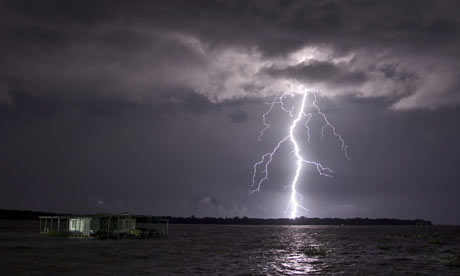
Catatumbo lightning over Lake Maracaibo in Venezuela. Photograph: Vladimir Marcano

Electrical storms, product of a unique meteorological phenomenon, have lit up nights in this corner of Venezuela for thousands of years. Francis Drake abandoned a sneak attack on the city of Maracaibo in 1595 when lightning betrayed his ships to the Spanish garrison.

But now the lightning has vanished. A phenomenon that once unleashed up to 20,000 bolts a night stopped in late January. Not a single bolt has been seen since.

"This is unprecedented. In recorded history we have not had such a long stretch without lightning," said Erik Quiroga, an environmentalist and leading authority on the Relampago de Catatumbo, or Catatumbo Lightning.

https://blogger.googleusercontent.com/img/b/R29vZ2xl/AVvXsEhK5WmdcfnAFhyphenhyphenX5hgTqeFEhdq8suviVXZiREt4mampyprmP17CcGqDmftNVaoUdTswMjTJyoxfrddstAQldeL9kDyptNpD9LXTLVj7lmO2CG_vwJPXMn2ihcUkfKX3iYa49GJAs1tjextx/s1600/rayo-catatumbo.jpg

https://blogger.googleusercontent.com/img/b/R29vZ2xl/AVvXsEicE9w_KOcW4Fbzpt7R-EZ7ddeINZh3w709CsofTyeVeFiMfQqDEZSm9o550DQrGqKJYkB7yMtTSx7-w16rHYIbqBcTeQSw8sR5kd8EzUUZ2E2uGfzr6QhToROzW8P8CFC2lbiF68-DgSnu/s1600/catatumbo.jpg

The spectacle, one of the longest single displays of continuous lightning in the world, lasts up to nine hours a night. On average it is visible over 160 nights a year and from 400km away. Lightning bolts discharged from cloud to cloud strike 16 to 40 times a minute.

They can reach an intensity of 400,000 amps but are so high thunder is inaudible. There are similar phenomena in Colombia, Indonesia and Uganda but they do not last the whole night.

Fishermen in the village of Congo Mirador, a collection of wooden huts on stilts at the phenomenon's epicentre, are puzzled and anxious by its absence. "It has always been with us," said Edin Hernandez, 62. "It guides us at night, like a lighthouse. We miss it."

https://blogger.googleusercontent.com/img/b/R29vZ2xl/AVvXsEiR_D7h4gHR0iXwFm7tGVa7SzdyoOPHfzNe6mO21ME3EeiSXdGux1jiPCSXdpCzXZ8A6dA8Rr-CnAgj-XS2bx82ppsc9maulE1-PaR902Hiv6Px8z8tiEjNXUNE0CDv1X_M3TkD6faWfKRc/s1600/Catatumbo-lightning+(4)%5B4%5D.jpg

The celestial spectacular appears to be a casualty of the El Niño weather phenomenon, which has disrupted global weather patterns and caused a severe drought in Venezuela. Rain has all but disappeared, drying up rivers and disrupting the conditions that produce the lightning, whose causes remain unclear.

One theory links it to decomposing organic materials which release methane. Another links it to Andean winds blowing across marshes, generating low pressure and building up an electrical charge in the atmosphere.

The last time the phenomenon vanished was in 1906 after a catastrophic 8.8-magnitude earthquake off the coast of Ecuador and Colombia unleashed a tsunami. The lightning returned three weeks later.

Now it is five weeks and there is still no sign of the nocturnal flashes. "I look for it every night but there is nothing," said Francisca Hernandez, 28, a schoolteacher in Congo Mirador who monitors Lake Maracaibo's sky for researchers based in Caracas.

Some scientists believe the electrical storms help replenish the ozone layer. Others doubt that, saying the ozone they produce reaches only the tropospheric atmosphere.

The drought has also extinguished many man-made lights across Venezuela as the country relies largely on hydropower. Last month, the president, Hugo Chávez, declared an electricity emergency and said severe rationing, which has blacked out towns and cities, could last months. One state electricity company told workers to pray for rain.

http://www.eyezed.com/wp-content/uploads/2009/09/forselles-com_maracaibo-45.jpg

Losing the lightning is a symbolic blow. In addition to warding off Drake's naval assault – an event celebrated in Lope de Vega's 1598 epic poem – it is credited with helping independence fighters defeat a Spanish fleet in 1823. The state of Zulia, which encompasses Lake Maracaibo, has a lightning bolt across its centre and refers to the phenomenon in its anthem.

Quiroga worries that when rains return the lightning may not recover its former glory. It was dwindling in frequency and force even before the drought, probably because deforestation and agriculture had clogged the Catatumbo river and several lagoons with silt.

"This is a unique gift and we are at risk of losing it," said Quiroga, who has led scientific teams to its epicentre. He has lobbied Venezuelan authorities to protect the area and the United Nations to recognise it as a world heritage site. A Unesco spokeswoman said there were no plans to do so because electrical storms did not have a "site".

Source :
guardian.co.uk
Darkness rarely lasted long in the skies over Lake Maracaibo. An hour after dusk the show would begin: a lightning bolt, then another, and another, until the whole horizon flashed white.
http://static.guim.co.uk/sys-images/Guardian/Pix/pictures/2010/3/2/1267535184483/Catatumbo-lightning-over--001.jpg
Catatumbo lightning over Lake Maracaibo in Venezuela. Photograph: Vladimir Marcano

Electrical storms, product of a unique meteorological phenomenon, have lit up nights in this corner of Venezuela for thousands of years. Francis Drake abandoned a sneak attack on the city of Maracaibo in 1595 when lightning betrayed his ships to the Spanish garrison.

But now the lightning has vanished. A phenomenon that once unleashed up to 20,000 bolts a night stopped in late January. Not a single bolt has been seen since.

"This is unprecedented. In recorded history we have not had such a long stretch without lightning," said Erik Quiroga, an environmentalist and leading authority on the Relampago de Catatumbo, or Catatumbo Lightning.

https://blogger.googleusercontent.com/img/b/R29vZ2xl/AVvXsEhK5WmdcfnAFhyphenhyphenX5hgTqeFEhdq8suviVXZiREt4mampyprmP17CcGqDmftNVaoUdTswMjTJyoxfrddstAQldeL9kDyptNpD9LXTLVj7lmO2CG_vwJPXMn2ihcUkfKX3iYa49GJAs1tjextx/s1600/rayo-catatumbo.jpg

https://blogger.googleusercontent.com/img/b/R29vZ2xl/AVvXsEicE9w_KOcW4Fbzpt7R-EZ7ddeINZh3w709CsofTyeVeFiMfQqDEZSm9o550DQrGqKJYkB7yMtTSx7-w16rHYIbqBcTeQSw8sR5kd8EzUUZ2E2uGfzr6QhToROzW8P8CFC2lbiF68-DgSnu/s1600/catatumbo.jpg

The spectacle, one of the longest single displays of continuous lightning in the world, lasts up to nine hours a night. On average it is visible over 160 nights a year and from 400km away. Lightning bolts discharged from cloud to cloud strike 16 to 40 times a minute.

They can reach an intensity of 400,000 amps but are so high thunder is inaudible. There are similar phenomena in Colombia, Indonesia and Uganda but they do not last the whole night.

Fishermen in the village of Congo Mirador, a collection of wooden huts on stilts at the phenomenon's epicentre, are puzzled and anxious by its absence. "It has always been with us," said Edin Hernandez, 62. "It guides us at night, like a lighthouse. We miss it."

https://blogger.googleusercontent.com/img/b/R29vZ2xl/AVvXsEiR_D7h4gHR0iXwFm7tGVa7SzdyoOPHfzNe6mO21ME3EeiSXdGux1jiPCSXdpCzXZ8A6dA8Rr-CnAgj-XS2bx82ppsc9maulE1-PaR902Hiv6Px8z8tiEjNXUNE0CDv1X_M3TkD6faWfKRc/s1600/Catatumbo-lightning+(4)%5B4%5D.jpg

The celestial spectacular appears to be a casualty of the El Niño weather phenomenon, which has disrupted global weather patterns and caused a severe drought in Venezuela. Rain has all but disappeared, drying up rivers and disrupting the conditions that produce the lightning, whose causes remain unclear.

One theory links it to decomposing organic materials which release methane. Another links it to Andean winds blowing across marshes, generating low pressure and building up an electrical charge in the atmosphere.

The last time the phenomenon vanished was in 1906 after a catastrophic 8.8-magnitude earthquake off the coast of Ecuador and Colombia unleashed a tsunami. The lightning returned three weeks later.

Now it is five weeks and there is still no sign of the nocturnal flashes. "I look for it every night but there is nothing," said Francisca Hernandez, 28, a schoolteacher in Congo Mirador who monitors Lake Maracaibo's sky for researchers based in Caracas.

Some scientists believe the electrical storms help replenish the ozone layer. Others doubt that, saying the ozone they produce reaches only the tropospheric atmosphere.

The drought has also extinguished many man-made lights across Venezuela as the country relies largely on hydropower. Last month, the president, Hugo Chávez, declared an electricity emergency and said severe rationing, which has blacked out towns and cities, could last months. One state electricity company told workers to pray for rain.

http://www.eyezed.com/wp-content/uploads/2009/09/forselles-com_maracaibo-45.jpg

Losing the lightning is a symbolic blow. In addition to warding off Drake's naval assault – an event celebrated in Lope de Vega's 1598 epic poem – it is credited with helping independence fighters defeat a Spanish fleet in 1823. The state of Zulia, which encompasses Lake Maracaibo, has a lightning bolt across its centre and refers to the phenomenon in its anthem.

Quiroga worries that when rains return the lightning may not recover its former glory. It was dwindling in frequency and force even before the drought, probably because deforestation and agriculture had clogged the Catatumbo river and several lagoons with silt.

"This is a unique gift and we are at risk of losing it," said Quiroga, who has led scientific teams to its epicentre. He has lobbied Venezuelan authorities to protect the area and the United Nations to recognise it as a world heritage site. A Unesco spokeswoman said there were no plans to do so because electrical storms did not have a "site".

Source :
guardian.co.uk

Want to Survive a Nuclear Attack? Just Chill Out

You can go back to being worried about being nuked. Except this time around, you don’t need to worry as much. The U.S. government has been making an aggressive push to prepare for an urban nuclear attack, publishing guides and getting emergency planners behind a public education campaign. 


They’ve also been conducting tests in major cities, setting off virtual 10-kiloton nuclear devices capable of engulfing 50,000 to 150,000 people with radioactive fallout and turning city centers into rubble. It’s like the ’50s all over again. Except a tad more relaxed.


There aren’t thousands of warheads aimed at us anymore. The threat may come more from smuggled terrorist devices. Which may or may not be as devastating.

And don’t think about the laughably friendly-but-frightening solution of “duck and cover” (see above). You just need to chill inside for a few days. From the Times:

Do not flee. Get inside any stable building and don’t come out till officials say it’s safe.

The advice is based on recent scientific analyses showing that a nuclear attack is much more survivable if you immediately shield yourself from the lethal radiation that follows a blast, a simple tactic seen as saving hundreds of thousands of lives. Even staying in a car, the studies show, would reduce casualties by more than 50 percent; hunkering down in a basement would be better by far.

The reason for the government’s new chillax (but still alarmed) approach: we the public tend to think survival of a nuclear attack is impossible. The report points at the ‘duck and cover’ campaign and more recent 9/11-era recommendation of ‘plastic sheeting and duct tape’ as reasons for public skepticism and a “sense of futility, fatalism, and hopelessness [that] severely impacts their desire and even their ability to absorb information and follow instructions.”

According to research by the Homeland Security Institute’s (HSI) Nuclear Incident Communication Planning, simply initiating communication regarding a possible nuclear detonation is “met with skepticism, concern about hidden intelligence information, and accusations of government propagandizing.”

The solution for now may be an “all-hazards” approach, one applicable to all types of emergencies, easy to remember, and action-oriented.

Still, a nuclear attack is no walk in the park, not unless the park is shrouded in fallout. Back to the things you should be keep in mind, according to the government:
  • Wait at least 24 hours before venturing outside. That’s about how long it will take fallout to descend to the ground.
  • The faster you protect yourself --ie, as soon as you see a flash-- the better. Injuries from falling debris are thought to be the most common. The thorax, abdomen, and head --and especially the eyes-- will be most vulnerable.
  • Backup your files. Electromagnetic pulse effects are bad for your computers. Or just buy a nuke-proof Panel PC.
  • Commit this graphic to memory :
Because it could take at least a day for the government to begin to rescue survivors suffering from traumatic injuries, radiation sickness, shock and flash-blindness, you’ll also need to have a kit of supplies. And probably some potassium iodide pills, which prevent your thyroid from absorbing radio-iodine and thus lowers the risk of future thyroid cancer. A radiation monitor wouldn’t hurt either. And hey, while you’re at it, a stylish, lightweight Demron™ torso vest and full-body radiation suit.

Look, I’m just trying to do a bit of a public service here. We don’t have to take the threat of a dirty nuke so heavily. It’s cool. Relax. Don’t worry. Lie down. Preferably in a room that’s underground and has no windows.

Also, watch this fun civil defense film from the ‘50s, which is still relevant. And, when combined with the government’s current messaging, it should strike in your heart just the right blend of coolness, comfort and terror.

Source :
www.motherboard.tv
You can go back to being worried about being nuked. Except this time around, you don’t need to worry as much. The U.S. government has been making an aggressive push to prepare for an urban nuclear attack, publishing guides and getting emergency planners behind a public education campaign. 


They’ve also been conducting tests in major cities, setting off virtual 10-kiloton nuclear devices capable of engulfing 50,000 to 150,000 people with radioactive fallout and turning city centers into rubble. It’s like the ’50s all over again. Except a tad more relaxed.


There aren’t thousands of warheads aimed at us anymore. The threat may come more from smuggled terrorist devices. Which may or may not be as devastating.

And don’t think about the laughably friendly-but-frightening solution of “duck and cover” (see above). You just need to chill inside for a few days. From the Times:

Do not flee. Get inside any stable building and don’t come out till officials say it’s safe.

The advice is based on recent scientific analyses showing that a nuclear attack is much more survivable if you immediately shield yourself from the lethal radiation that follows a blast, a simple tactic seen as saving hundreds of thousands of lives. Even staying in a car, the studies show, would reduce casualties by more than 50 percent; hunkering down in a basement would be better by far.

The reason for the government’s new chillax (but still alarmed) approach: we the public tend to think survival of a nuclear attack is impossible. The report points at the ‘duck and cover’ campaign and more recent 9/11-era recommendation of ‘plastic sheeting and duct tape’ as reasons for public skepticism and a “sense of futility, fatalism, and hopelessness [that] severely impacts their desire and even their ability to absorb information and follow instructions.”

According to research by the Homeland Security Institute’s (HSI) Nuclear Incident Communication Planning, simply initiating communication regarding a possible nuclear detonation is “met with skepticism, concern about hidden intelligence information, and accusations of government propagandizing.”

The solution for now may be an “all-hazards” approach, one applicable to all types of emergencies, easy to remember, and action-oriented.

Still, a nuclear attack is no walk in the park, not unless the park is shrouded in fallout. Back to the things you should be keep in mind, according to the government:
  • Wait at least 24 hours before venturing outside. That’s about how long it will take fallout to descend to the ground.
  • The faster you protect yourself --ie, as soon as you see a flash-- the better. Injuries from falling debris are thought to be the most common. The thorax, abdomen, and head --and especially the eyes-- will be most vulnerable.
  • Backup your files. Electromagnetic pulse effects are bad for your computers. Or just buy a nuke-proof Panel PC.
  • Commit this graphic to memory :
Because it could take at least a day for the government to begin to rescue survivors suffering from traumatic injuries, radiation sickness, shock and flash-blindness, you’ll also need to have a kit of supplies. And probably some potassium iodide pills, which prevent your thyroid from absorbing radio-iodine and thus lowers the risk of future thyroid cancer. A radiation monitor wouldn’t hurt either. And hey, while you’re at it, a stylish, lightweight Demron™ torso vest and full-body radiation suit.

Look, I’m just trying to do a bit of a public service here. We don’t have to take the threat of a dirty nuke so heavily. It’s cool. Relax. Don’t worry. Lie down. Preferably in a room that’s underground and has no windows.

Also, watch this fun civil defense film from the ‘50s, which is still relevant. And, when combined with the government’s current messaging, it should strike in your heart just the right blend of coolness, comfort and terror.

Source :
www.motherboard.tv

NASA Finds Amino Acids on Impossible Meteorite, Improves Chances E.T. Exists

Amino acids have been found in remote space bodies before--including a carbon-rich meteor--and lend support to the idea that life on Earth was "seeded" by chemicals rained down from space on our young planet.


But a new discovery of amino acids inside a meteorite where they really shouldn't belong is a major find, possibly more significant in terms of finding extra-terrestrial life than NASA's recent revelations about arsenic-based life found in Mono lake here on Earth.

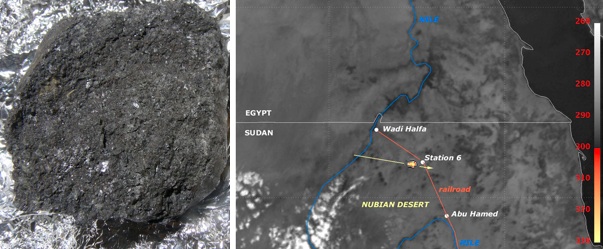
The meteorite crashed into the Sudanese desert, but came from Asteroid 2008 TC3. It contains minerals that strongly suggest it was formed in a violent collision between two asteroids, which probably raised the temperature of the rock to way over 2,000 degrees Fahrenheit for a long period, erasing any life-like chemistry that the asteroids may have had beforehand.

But when the meteorite samples were analyzed 19 different amino acids were found in its make-up, in tiny amounts, and the possibility that they are Earthly contaminants has been ruled out.

This means that there may be a new, alternative, method for making amino acids in space. Previously it was thought liquid water and cooler temperatures were needed, but now it's suggested that amino acids could be made under very hot conditions when space-collisions result in a mix of temperatures and chemistry.

In its way, this discovery is every bit as significant as Felisa Wolfe-Simon's arsenic-based bacteria are. NASA used this discovery to imply that alien life could exist in places where we hadn't thought possible before, which massively boosts the chances that E.T. is out there, somewhere.

But the theory that comets can seed planets with the chemicals necessary to make life just got a huge boost from this new asteroid-meteorite find, which implies amino acids may be far more ubiquitous than previously thought. Plus this new find is much less controversial than the arsenic bacteria, which is currently embroiled in a global debate about the validity of the science.

The take-away is that life may be found in more places in the universe than we'd ever thought it could be--including in places in our own solar system.

Source :
www.fastcompany.com
Amino acids have been found in remote space bodies before--including a carbon-rich meteor--and lend support to the idea that life on Earth was "seeded" by chemicals rained down from space on our young planet.


But a new discovery of amino acids inside a meteorite where they really shouldn't belong is a major find, possibly more significant in terms of finding extra-terrestrial life than NASA's recent revelations about arsenic-based life found in Mono lake here on Earth.

The meteorite crashed into the Sudanese desert, but came from Asteroid 2008 TC3. It contains minerals that strongly suggest it was formed in a violent collision between two asteroids, which probably raised the temperature of the rock to way over 2,000 degrees Fahrenheit for a long period, erasing any life-like chemistry that the asteroids may have had beforehand.

But when the meteorite samples were analyzed 19 different amino acids were found in its make-up, in tiny amounts, and the possibility that they are Earthly contaminants has been ruled out.

This means that there may be a new, alternative, method for making amino acids in space. Previously it was thought liquid water and cooler temperatures were needed, but now it's suggested that amino acids could be made under very hot conditions when space-collisions result in a mix of temperatures and chemistry.

In its way, this discovery is every bit as significant as Felisa Wolfe-Simon's arsenic-based bacteria are. NASA used this discovery to imply that alien life could exist in places where we hadn't thought possible before, which massively boosts the chances that E.T. is out there, somewhere.

But the theory that comets can seed planets with the chemicals necessary to make life just got a huge boost from this new asteroid-meteorite find, which implies amino acids may be far more ubiquitous than previously thought. Plus this new find is much less controversial than the arsenic bacteria, which is currently embroiled in a global debate about the validity of the science.

The take-away is that life may be found in more places in the universe than we'd ever thought it could be--including in places in our own solar system.

Source :
www.fastcompany.com

Why Popeye Eat Spinach?

Anyone would know Popeye, cartoon characters are portrayed as brave sailors. He suddenly had super strength every time the ate a can of spinach. So large a benefit of spinach?

http://www.allantiaging.com/wp-content/uploads/2007/10/spinach_popeye.jpg

As a work of fiction, of course, is fine if the cartoon is a bit dramatized the effects of eating spinach. Popeye is in normal condition has the posture of small and wiry, in a flash able to fight Brutus, who bodied the main enemy is much greater after eating spinach.

Popeye cartoon character created by Elzie Crisler Segar, and was introduced in comic strip form in early 1929. Quickly, the figure is also depicted always chewed tobacco pipe was successfully achieved popularity during the 1930s.

In those days, Popeye cartoons are part of a campaign to eat vegetables among children. Although containing many nutrients, vegetables are less favored by the kids because it is considered bad.

Spinach is very rich content of various vitamins from A to K. It also contains many minerals, including potassium, phosphorus, magnesium and iron.

Spinach also contains other nutrients such as various essential amino acids and fiber. Fibers contained in spinach can prevent constipation, hemorrhoid and irritable bowel syndrome.

Although not many clinical trials, spinach believed to overcome some health problems such as:
1. purify the blood after childbirth
2. strengthen hair roots
3. prevent low blood pressure
4. prevent anemia (anemia)
5. prevent kidney failure


Some people even believe that spinach is also efficacious for: 
1. prevent the decrease of vision
2. prevent cataracts
3. prevent cancer.


Campaigns can be told through cartoons succeed, because the consumption of spinach in the United States recorded an increase to 33 percent when the popularity of the cartoon Popeye the sailor was so explosive. Still, there are interesting rumors, this hidden behind the campaign.

Rumors are associated with the selection of spinach as Popeye's secret weapon. There are many vegetables or other fruits are also rich in nutrients, but the creators chose spinach as the 'fuel' for this brave sailor.

Presumably the reason related to historical errors about the amount of iron content in spinach. In 1870, a scientist named Dr. E. Wolf von mislay comma when writing the content of iron in spinach. This error causes excessive belief about the benefits of spinach.

Nobody realizes mistakes until 70 years later, when already known as Popeye eating spinach. At that time, only then revealed that the iron content in vegetables is only one tenth of which was written by Dr. Wolf.

But this rumor was denied by Dr. Mike Sutton, scientists are trying to track down the error-related content of iron in the Popeye's favorite food. In conclusion, published in the Internet Journal of Ciminology year 2009, he referred to was not enough evidence about the existence of these errors.

Dr. Sutton calls it, the spinach was chosen not because it contains iron, but because the rich in vitamin A. Whatever it is, many consume spinach and other vegetables will still provide benefits for health.

Source :
newsfunz.blogspot.com
Anyone would know Popeye, cartoon characters are portrayed as brave sailors. He suddenly had super strength every time the ate a can of spinach. So large a benefit of spinach?

http://www.allantiaging.com/wp-content/uploads/2007/10/spinach_popeye.jpg

As a work of fiction, of course, is fine if the cartoon is a bit dramatized the effects of eating spinach. Popeye is in normal condition has the posture of small and wiry, in a flash able to fight Brutus, who bodied the main enemy is much greater after eating spinach.

Popeye cartoon character created by Elzie Crisler Segar, and was introduced in comic strip form in early 1929. Quickly, the figure is also depicted always chewed tobacco pipe was successfully achieved popularity during the 1930s.

In those days, Popeye cartoons are part of a campaign to eat vegetables among children. Although containing many nutrients, vegetables are less favored by the kids because it is considered bad.

Spinach is very rich content of various vitamins from A to K. It also contains many minerals, including potassium, phosphorus, magnesium and iron.

Spinach also contains other nutrients such as various essential amino acids and fiber. Fibers contained in spinach can prevent constipation, hemorrhoid and irritable bowel syndrome.

Although not many clinical trials, spinach believed to overcome some health problems such as:
1. purify the blood after childbirth
2. strengthen hair roots
3. prevent low blood pressure
4. prevent anemia (anemia)
5. prevent kidney failure


Some people even believe that spinach is also efficacious for: 
1. prevent the decrease of vision
2. prevent cataracts
3. prevent cancer.


Campaigns can be told through cartoons succeed, because the consumption of spinach in the United States recorded an increase to 33 percent when the popularity of the cartoon Popeye the sailor was so explosive. Still, there are interesting rumors, this hidden behind the campaign.

Rumors are associated with the selection of spinach as Popeye's secret weapon. There are many vegetables or other fruits are also rich in nutrients, but the creators chose spinach as the 'fuel' for this brave sailor.

Presumably the reason related to historical errors about the amount of iron content in spinach. In 1870, a scientist named Dr. E. Wolf von mislay comma when writing the content of iron in spinach. This error causes excessive belief about the benefits of spinach.

Nobody realizes mistakes until 70 years later, when already known as Popeye eating spinach. At that time, only then revealed that the iron content in vegetables is only one tenth of which was written by Dr. Wolf.

But this rumor was denied by Dr. Mike Sutton, scientists are trying to track down the error-related content of iron in the Popeye's favorite food. In conclusion, published in the Internet Journal of Ciminology year 2009, he referred to was not enough evidence about the existence of these errors.

Dr. Sutton calls it, the spinach was chosen not because it contains iron, but because the rich in vitamin A. Whatever it is, many consume spinach and other vegetables will still provide benefits for health.

Source :
newsfunz.blogspot.com

Blogger Tricks

Twitter Delicious Facebook Digg Stumbleupon Favorites More